Second Sunday of Ordinary Time, January 18, 2026
During Judah's difficult restoration after exile, the prophet meditates on the joys and pains of being called by God for special service. This may apply to the prophet himself, or to the people as a whole. Jesus applied this to himself, and the gospel writers did, too.
Paul begins his first letter to the Corinthians by asserting his authority as an apostle. He reminds his audience that they're called to be holy, as are all, everywhere, who invoke the name of Jesus.
John the Baptist give Jesus two titles, and makes three other assertions about Jesus' importance.
Our Liturgical Setting: It's time to begin another Sunday-by-Sunday journey with Jesus in his public ministry. Today's gospel, John1:29-34 gives us John the Baptist passing the torch, if you will, to Jesus. John first calls Jesus "Lamb of God," then ascribes to Jesus a baptism more potent than his own, and finally names Jesus "Son of God." That title, and the inaugural nature of this Sunday, may govern this choice of first reading.
The Literary and Theological Background: Scholars have called this and three similar passages from this section of Isaiah (chapters 40-55) the Songs of the Suffering Servant. They're about a mysterious figure, who sometimes speaks in the first person, and whom God sometimes addresses. Sometimes the Servant is described as a prophet, sometimes as one whose suffering brings about a benefit for the people. In the original author's mind, the servant was probably a figure for the people of Israel, or for a faithful remnant within the people. The gospels clearly show that Jesus, and the early church, saw aspects of Jesus' own life and mission foreshadowed in the Servant Songs, and the church refers to all of them throughout the liturgical year. Today's is from the second servant song; we read a more complete version of it, Isaiah 49:1-6, on the feast of the birth of John the Baptist. The first servant song, Isaiah 42: 1-7, was our first reading last week, on the feast of the Baptism of the Lord. On Passion Sunday, we proclaim the third, Isaiah 50:4-7, and on Good Friday, the fourth, Isaiah 52:13-53:12.
The Structure of This Passage: Note that the Lord speaks first ("You are my servant, ..."), then the Servant, and then the Lord again ("It is too little, ..."). Jacob and Israel are both names for the same people (indeed, they were both names of the same patriarch). Mark these changes with pauses and changes in tone of voice.
To prepare your proclamation, read this two ways:
God wants that people brought back to himself, but that's not all: God furthermore wants to make the servant, that is the people, a beacon for other nations, that God's salvation may reach all the earth. This is the revolutionary part of the message, for most peoples still conceived their gods as local, territorial and tribal. A God whose care is universal was (and remains) a hard sell, needing courageous servants who can make the case convincingly. Deliver it with a strong finish. Nothing more important was ever said.
The heading or letterhead announces that this is from Paul and Sosthenes (SOS the knees) and that Paul is "called to be an apostle of Christ Jesus by the will of God." That level of authority is important for what follows, which we'll read on future Sundays.
The inside address shows the letter is for all members of the church at Corinth. This was a bawdy seaport in cosmopolitan Greece. The vices of every seaport, plus the philosophical ferment of ancient Greece, are part of these peoples' lives, and give rise, in part, to the need for this letter. Right off the bat, Paul reminds them they're "sanctified and called to be holy" like all who call on the name of Jesus.
The salutation is not just "Dear Corinthians," but a wish for their "grace and peace."
In your proclamation, pause between the elements as described above. Emphasize the word "apostle" in the first sentence. Pause before "to the church." And pause once more before "Grace to you ..."
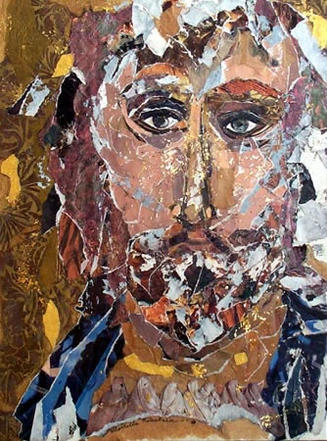
Image by Marcella Paliekara, found on a blog post of J. Mary Luti, a retired seminary professor and United Church of Christ pastor.
This page updated January 13, 2026